When?
My shoot will take place across two weekends. The first advert will be shot on the 4th of March. It will last from 12-5pm. If necessary it will go on longer if I don't get all the footage I need. As it's an exterior shoot, I need sunlight and so have decided to shoot in the morning. If it's not sunny enough on the day I will postpone the shoot to Sunday but have checked the weather and conditions are expected to be clear.
My next shoot will take place the week after on the 18th of March. It will last from 8-12:30 AM but could potentially overrun into the afternoon. This shoot is interior so doesn't require specific times of day and can mainly use the natural light available.
Where?
My first shoot will take place in an area of Hilly Fields Park. I have an area in mind with a running path that I plan to use. It is quite secluded and free of trees so I will have lots of natural lighting.
My second shoot will be shot in the spare room of my home. This is useful as I can dress it to look like a teenagers bedroom. It has large windows and two skylights so I will have lots of natural lighting, however I will be using lamps as well.
Who?
I will be directing and operating the camera on my shoot. I will be using two actors for my first shoot, Zoe and Scott. On my second shoot I'll use Zoe and Mahir. I will be using a crew of 1 person for each shoot, a sound operator, makeup/hair/costume role and a set dresser.
My Website

Click here to access my website
Thursday, 8 February 2018

Wednesday, 31 January 2018
8. The Planning I intend to complete in order to ensure a successful outcome for my production.
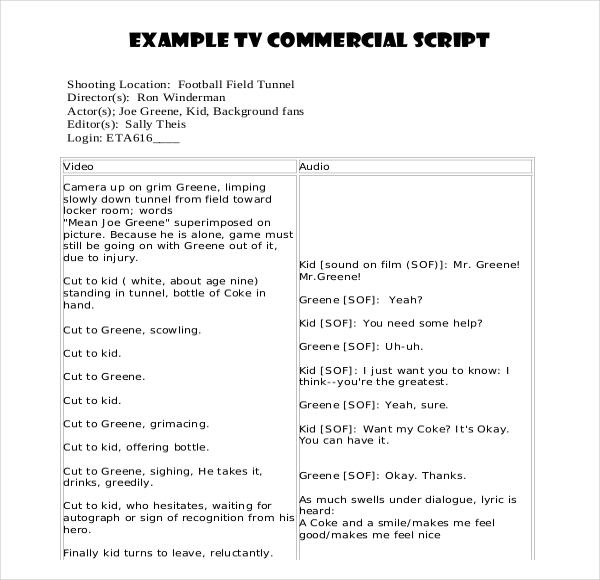
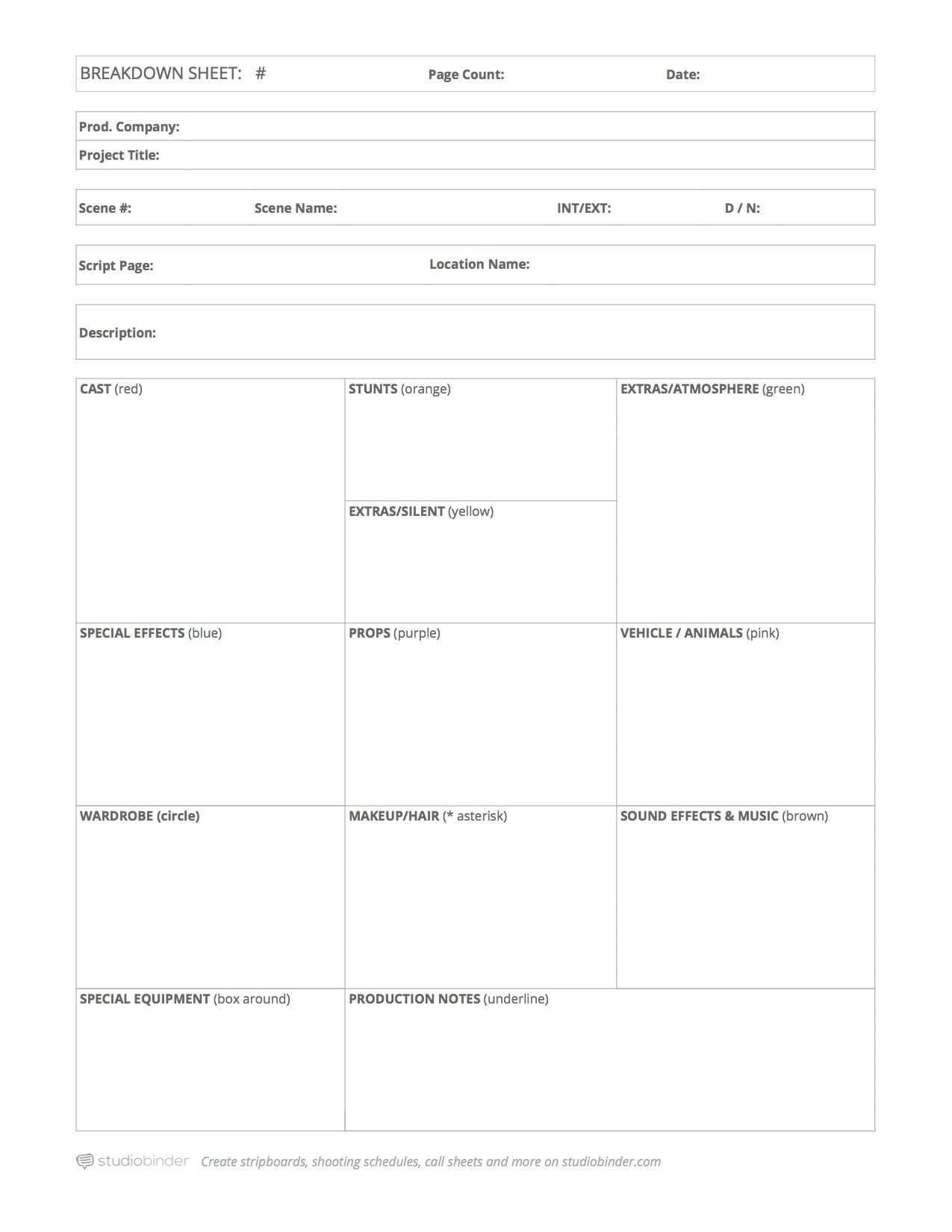
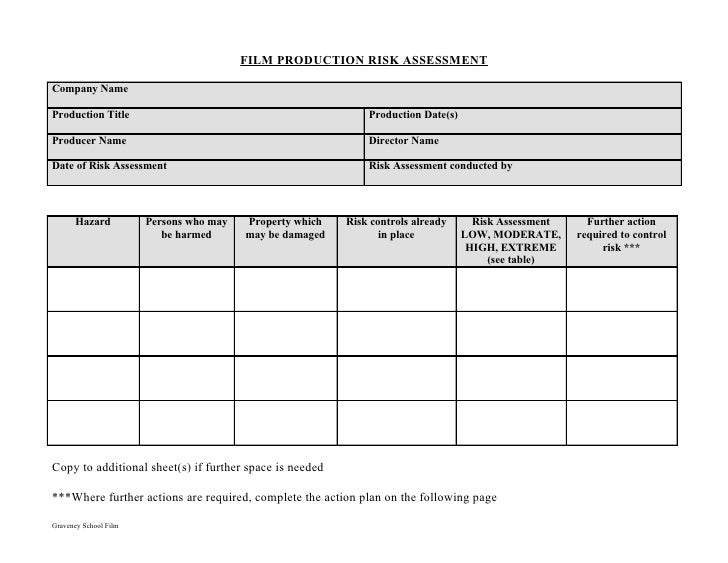
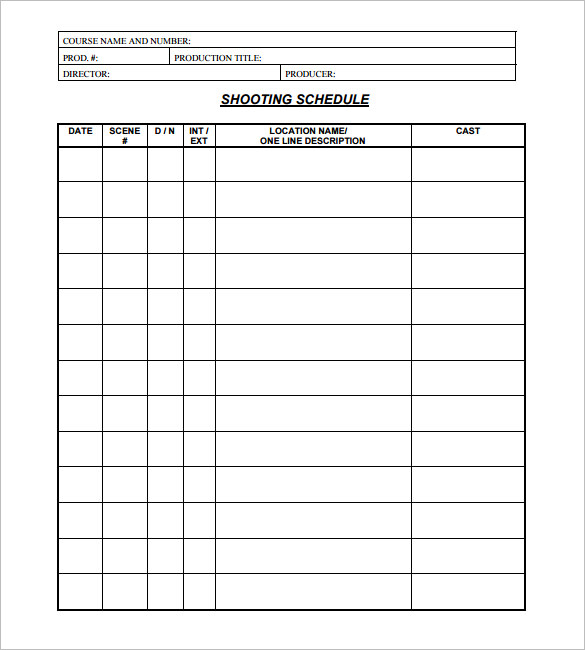
In order for my production to run smoothly I need to plan as much as possible. I have come up with a list of planning that I must complete prior to my shoot. I have also included a template of each that will help me to structure my documents properly. I will need to send these out to cast/crew to make sure everyone's on the same page.

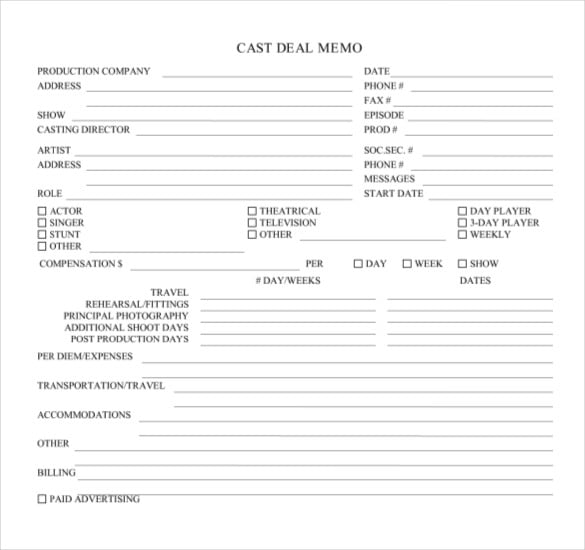
- Script
I need to write audio/visual style scripts for my two adverts. I will use this as the basis for all my other planning.
- Script Breakdown/Breakdown Sheet
Using the script I will do a breakdown of every single item needed for the shoot. E.g. props, costumes, locations.
- Shot List/Storyboard
I will then make a shot by shot breakdown of the story, thinking about framing, focal length and camera angle. This will be a visual representation of the script.
- Location Scouting
I will visit the locations I am considering for my production and take into account things like natural light, where I can position my camera, noise pollution and access for all those involved.
- Risk Assessment
- Scheduling/Itinerary
I'm then going to draw up a plan of timings over the next few weeks to make sure I'm on track, but also leave room for potential errors or repeats of things.
- Casting
- Production Design
I will make lists of all the components needed for my production and how I am going to source them.
-Props list
-Costume list
-Hair and makeup
-Hair and makeup
-Set design
-Lighting design
Thursday, 11 January 2018
7. My Statement of Intent
Here is my statement of intent, detailing how I plan to use the areas of media framework in response to the brief.
6.What I have learnt about industry in relation to television advertising and how I intend to use this knowledge and understanding, to ensure my production is appropriate to the media industry context of the set brief I have chosen.
As specified in the brief, the adverts that we make must
follow the guidelines of the ASA, so I wanted to research these to find out more about how the advertising industry is policed and how it will affect my advert.
The Advertising Standards Agency is the UK’s independent regulator of advertising across all
media. They make ads responsible for consumers by monitoring and picking up
trends in complaints. They can have the ad removed if they persistently break rules
and refer them to Ofcom or Trading Standards for further action. The ASA are constantly revising and changing
rules to fit with modern society thinking via an independent counsel made up of people of all type. 70% of their work is to do with misleading advertising – e.g. hidden costs or not specifying
that something is an ad. Other 30% is about offense and harm.
The advertising standards agency has a broadcast code
relating to all advertisements. If a viewer has a problem with something they
see in an advert they can make a complaint to the ASA, it will be reviewed and
further action may be taken. They will assess
a complaint against their rules. If they see a problem, they help the advertiser amend
or withdraw the ad, these are known as “informal cases”. They may conduct “formal” investigations aswell. However, they can’t
assess ads until they’ve come out because there are so many. The ASA's slogan is "Every UK ad is a responsible ad."
The ASA Broadcast code has over 30 points. Including rules
around.
- Misleading advertising – anything you claim, you must be able to prove. For example, saying something is “free” when there are hidden costs, fake testimonials and unfair comparisons
- Harm and Offence – e.g. Loudness of ads, shock tactics and photosensitive epilepsy.
- Advertising for children – unfair pressure, unsafe practices and pester power
- Social responsibility rules – lotteries, gambling, betting, alcohol – the reason why you often see “Please drink responsibly” etc. at the end of alcohol adverts.
An example of an ad that does adhere to the ASA guidelines would be the recent Dove UK #mybeautymysay ad, featuring stories from real women who stood up to traditional stereotypes around beauty and femininity. This ad would definitely be approved by the ASA as it depicts a wide range of races, body sizes and professions and call for social equality.

Lynx Ad banned in 2011 after 113 complaints
Sexually suggestive, demeaning to women, and inappropriate
for public display because it could be seen by children.
In 2016, 9/10 complained about ads were Television adverts. As I have chosen to do TV for my coursework, I need to be particularly careful that my advert fits in with these guidelines. I especially want to depict gender roles equally and fairly, not only because this would benefit advertising of a unisex product but also because of the recent crackdown by the ASA
Both my adverts are going to feature non-diegetic sound and therefore it was important that I find un-copyrighted music that I could edit appropriately to last for the 30second alloted time.
Both my adverts are going to feature non-diegetic sound and therefore it was important that I find un-copyrighted music that I could edit appropriately to last for the 30second alloted time.
From research I found that
- The music i can use must be in the public domain
- This can be anything over 100 years old from the release date, or if it has been 75 years since the copyright notice was put in place and the composer is no longer living.
- Because I want to convey the 'youth' brand identity I decided to find music produced recently that is free from copyright, there are many websites where you can purchase or download the music
- Some authors explicitly put work in the public domain
- It is unlawful to use music that is copyrighted then you cannot perform, distribute
- Recent popular songs that have entered the public domain are happy birthday and 'love me do' by the Beatles
- For my pieces I have used a website called www.Bensound.com where a man creates copyright free instrumental music for anyone to use.
The Copyright Office regulates this - www.Gov.co.uk states -
Copyright in a sound recording will usually be owned by the record producer and is separate from any copyright in the content of the recording. For example:
Copyright in a sound recording will usually be owned by the record producer and is separate from any copyright in the content of the recording. For example:
- the composer of the music will be the author of the musical work and will be the first owner of the copyright in that music
- the lyrics of the song are protected separately by copyright as a literary work and will usually be owned by the person who wrote them
E4 Audience - Tailored to 16-34 year olds
The channel was launched as a youth version of channel 4. They pioneered linking TV with social media an the internet by streaming things live and setting up many accounts that fans were encouraged to use. They rely largely on advertising for there funding. The receive a very large share of the 16-34 demographic, at highs of 5.5% in 2016 which was the highest of any digital channel.
5. What I have learnt about the representation of events, issues, individuals and social groups in TV adverts and how I intend to demonstrate this knowledge and understanding in my production in order to communicate meaning successfully.
It's important that in my adverts I adhere to the points made in the brief about representation. I need to include at least two actors from at least two social groups. To ensure I do this, and represent wider societal issues in my work I have researched representation in areas particularly relevant to my adverts.
Media representations are how we portray groups, experiences, ideas or topics to an audience. Often, these representations don't reflect reality and 're-present' a new one.
Youth - a report by Shout Out UK cited "Figures show that young people, mainly boys, have been described in national and regional papers as “yobs” (591 times), followed by “thugs” (254 times), “sick” (119 times) and “feral” (96 times). " The medias coverage of young people is largely negative.
It's clear that media portrayal of people affects how they and others feel about them. If they're expected to be lazy, anti-social and lacking in respect, they will eventually conform to this stereotype.
I want to portray the youth in my advert fairly and positively, not only because I disagree with the negative image they get in the media, but also because it's my target audience. By using happy, healthy actors smiling and accomplishing there goals in my adverts, I hope to inspire other youth to be aspirational and to challenge the stereotypes unfairly labelled on them.
A report by Demos in 2014 found 80% of young people believe this generation is more concerned with social issues than previous ones. This is also how I hope to generate a response in my adverts by challenging social issues like gender stereotypes and peer approval.
This Catherine Tate sketch clearly satirises through the character of Lauren, the way that the youth are portrayed by older generations, answering back, lacking respect and not caring about the education.
Women - women in media are often portrayed through the "male gaze", passive objects that men desire. Most media stereotypes of women are emotional or sexual and focus around relationships and having children. Recently, we have been more progressive and are beginning the new image of the 'strong women', she has children but also has a job and is just as sporty as her male counterparts.
Men are usually strong and sporty or seen working. However, there has been the emergence of the 'new man' in recent years, in touch with his feminine side and seen to be interested in fashion and relationships
This clip from friends shows Ross struggling to come to terms with the fact that his son has a barbie doll, before realising that breaking down gender norms are a societal construct which doesnt apply to children. It shows the way we try to force children to play with GI Joe toys or Barbie dolls according to their gender.
Levi Strauss teaches the representation of dominant and subordinate groups. Dominant groups are typically - white, male, upper/middle class, middle aged, heterosexual. While Subordinate are - black/other ethnic groups, female, working class, young/old, LGBTQ. In my adverts I want to get rid of these unfair representation and present my actors and characters as diverse in all these aspects, but still being portrayed as equal.
I found this video made by Dove, which asked women to choose whether to walk through a door that said "beautiful" or "average". The advert was great as it asked real women to consider the representation they give themselves, this is so largely affected by representation of beauty in the media that most assumed they would have to go through the average door, despite no one telling them to. I hope that in my advert I can make women and men feel beautiful and empowered.
Media representations are how we portray groups, experiences, ideas or topics to an audience. Often, these representations don't reflect reality and 're-present' a new one.
Youth - a report by Shout Out UK cited "Figures show that young people, mainly boys, have been described in national and regional papers as “yobs” (591 times), followed by “thugs” (254 times), “sick” (119 times) and “feral” (96 times). " The medias coverage of young people is largely negative.
It's clear that media portrayal of people affects how they and others feel about them. If they're expected to be lazy, anti-social and lacking in respect, they will eventually conform to this stereotype.
I want to portray the youth in my advert fairly and positively, not only because I disagree with the negative image they get in the media, but also because it's my target audience. By using happy, healthy actors smiling and accomplishing there goals in my adverts, I hope to inspire other youth to be aspirational and to challenge the stereotypes unfairly labelled on them.
A report by Demos in 2014 found 80% of young people believe this generation is more concerned with social issues than previous ones. This is also how I hope to generate a response in my adverts by challenging social issues like gender stereotypes and peer approval.
This Catherine Tate sketch clearly satirises through the character of Lauren, the way that the youth are portrayed by older generations, answering back, lacking respect and not caring about the education.
Men are usually strong and sporty or seen working. However, there has been the emergence of the 'new man' in recent years, in touch with his feminine side and seen to be interested in fashion and relationships
This clip from friends shows Ross struggling to come to terms with the fact that his son has a barbie doll, before realising that breaking down gender norms are a societal construct which doesnt apply to children. It shows the way we try to force children to play with GI Joe toys or Barbie dolls according to their gender.
I found this video made by Dove, which asked women to choose whether to walk through a door that said "beautiful" or "average". The advert was great as it asked real women to consider the representation they give themselves, this is so largely affected by representation of beauty in the media that most assumed they would have to go through the average door, despite no one telling them to. I hope that in my advert I can make women and men feel beautiful and empowered.
4. What I have learnt about the content and appeal of TV adverts and how I intend to demonstrate this knowledge and understanding in my production in order to communicate successfully with the target audience.
AUDIENCE THEORY AND GRATIFICATIONS
This theory focuses on the consumer and what they actually do with the media they are presented with, there are four parts to it:
Identify - Audiences enjoy empathising or relating to the media they consume. Reality TV shows like Made in Chelsea or lifestyle magazines like Heat, show people the celebrities they aspire to be while also allowing them to personally identify with the social groups, problems and content they consume.
Educate - Audiences want to be informed and educated by the media they consume. An example of this would be watching a documentary like Blue Planet or reading a newspaper like the Guardian.This allows us to become more knowledgeable about whats going on in the world and topics we didn't previously know about
Entertain - We consume media to escape from our mundane, everyday lives. For example a fantasy film like Lord of the Rings or a reading a book like Harry Potter allows us to be diverted from reality for a while.
Social interaction - Some media forms aim to generate an immediate and sociable response from their audiences. Big Brother allows users to vote and actively take part in the show. Social media allows people to share there views and experiences instantly.
Marketing terms - As specified in the brief we have a particular target audience we are trying to reach out to in our adverts. This can be divided into three categories:
DEMOGRPAHICS - who your buyer is, this is based on things like age, gender, income, education, occupation. For me this is 16-25 years old, Male and Female
From this age group, largely made up of students or low level workers, I can assume income will be fairly low. Occupations will either be part time jobs in retail/babysitting/tutoring o entry level jobs for university graduates. However, unlike other generations, millennial have had much larger access to higher education and a wide range of social knowledge too. Therefore my target audience will likely care lots about social issues, I can tie this into ideas about gender and equality I hope to use in my ad.
PYSCHOGRPAHICS - Why they buy
The Millennial generation is obsessed by being up to date, with the rise of social media and on demand services. At a younger age, generations are more inclined to peer pressure and approval, and like to buy things to feel like they are part of a club or collective identity.
GEODEMOGRAPHICS - where they live/buy
This focuses on what kind of areas and regions of the UK are being targeted and what there general views and characteristics. The channel E4 reaches the whole of the UK so uses a variety of TV shows in different areas, for example Made in Chelsea in London and Skins is set in Bristol. This is useful because it means I don't have to adhere to any particular regional views. In acordance with the ASA guidelines I also havent included any political or moral views that could cause debate among audiences.
E4 Audience - Tailored to 16-34 year olds
The channel was launched as a youth version of channel 4. They pioneered linking TV with social media an the internet by streaming things live and setting up many accounts that fans were encouraged to use. They rely largely on advertising for there funding. The receive a very large share of the 16-34 demographic, at highs of 5.5% in 2016 which was the highest of any digital channel.
Target Audience Grouping System (TAGS) is a method of categorisation specifically developed for advertising. From looking at the criteria, my target audience fits into the 'Young Hopefuls' category. This constitutes 15-24 year olds, they are low income, but high level media consumers. Between my adverts airing times of 7-9pm, is the primary time that this audience sits down to watch, having come home from school/uni/work, but not staying up too late. The content should be light and comedic, but this is also an inquisitive generation who wants to be informed as well as entertained.
Broadcasters' Audience Research Board (BARB) - They deliver the audience data figures - they cover, who, what, when, where and how people watch things. To do this they use over 1000 households to get an idea of the answers to these questions to represent the whole country. They can see trends in services like Netflix or how we watch like tablets and phones.
These are the viweing figures for the last week on E4.

Most watched programmes are The Inbetweeners and The Big Bang Theory
Here are some examples of the most popular programmes on E4, their synopsese and what I have taken away about the kind of audience I need to cater to.
Glee "Optimistic teacher Will Schuester heads up McKinley High School's glee club -- New Directions -- a place where ambitious and talented students can find strength, acceptance and their voice. As the students find themselves, they also enjoy a respite from the harsh realities of life. Mr. Schuester hopes to help the kids in every way he can, and also dreams of taking the group to nationals. As Schuester and the glee club pursue their goal, they face opposition from a conniving cheerleading coach, Sue Sylvester, who tries to sabotage the group at every turn."
A clear emphasis on high school/youth-ideas about fitting in/being who you are- Growing up, realising your dreams.
The Big Bang theory -"best friends and roommates Leonard and Sheldon, physicists who work at the California Institute of Technology, may be able to tell everybody more than they want to know about quantum physics, but getting through most basic social situations, especially ones involving women, totally baffles them. How lucky, then, that babe-alicious waitress/aspiring actress Penny moves in next door. Frequently seen hanging out with Leonard and Sheldon are friends and fellow Caltech scientists Wolowitz and Koothrappali. Will worlds collide? Does Einstein theorize in the woods?"
-Fitting in as an outsider
-Comedy
-A world people don't know much about
This theory focuses on the consumer and what they actually do with the media they are presented with, there are four parts to it:
Identify - Audiences enjoy empathising or relating to the media they consume. Reality TV shows like Made in Chelsea or lifestyle magazines like Heat, show people the celebrities they aspire to be while also allowing them to personally identify with the social groups, problems and content they consume.
Educate - Audiences want to be informed and educated by the media they consume. An example of this would be watching a documentary like Blue Planet or reading a newspaper like the Guardian.This allows us to become more knowledgeable about whats going on in the world and topics we didn't previously know about
Entertain - We consume media to escape from our mundane, everyday lives. For example a fantasy film like Lord of the Rings or a reading a book like Harry Potter allows us to be diverted from reality for a while.
Social interaction - Some media forms aim to generate an immediate and sociable response from their audiences. Big Brother allows users to vote and actively take part in the show. Social media allows people to share there views and experiences instantly.
Marketing terms - As specified in the brief we have a particular target audience we are trying to reach out to in our adverts. This can be divided into three categories:
DEMOGRPAHICS - who your buyer is, this is based on things like age, gender, income, education, occupation. For me this is 16-25 years old, Male and Female
From this age group, largely made up of students or low level workers, I can assume income will be fairly low. Occupations will either be part time jobs in retail/babysitting/tutoring o entry level jobs for university graduates. However, unlike other generations, millennial have had much larger access to higher education and a wide range of social knowledge too. Therefore my target audience will likely care lots about social issues, I can tie this into ideas about gender and equality I hope to use in my ad.
E4 Audience - Tailored to 16-34 year olds

Most watched programmes are The Inbetweeners and The Big Bang Theory
Here are some examples of the most popular programmes on E4, their synopsese and what I have taken away about the kind of audience I need to cater to.
Glee "Optimistic teacher Will Schuester heads up McKinley High School's glee club -- New Directions -- a place where ambitious and talented students can find strength, acceptance and their voice. As the students find themselves, they also enjoy a respite from the harsh realities of life. Mr. Schuester hopes to help the kids in every way he can, and also dreams of taking the group to nationals. As Schuester and the glee club pursue their goal, they face opposition from a conniving cheerleading coach, Sue Sylvester, who tries to sabotage the group at every turn."
The Big Bang theory -"best friends and roommates Leonard and Sheldon, physicists who work at the California Institute of Technology, may be able to tell everybody more than they want to know about quantum physics, but getting through most basic social situations, especially ones involving women, totally baffles them. How lucky, then, that babe-alicious waitress/aspiring actress Penny moves in next door. Frequently seen hanging out with Leonard and Sheldon are friends and fellow Caltech scientists Wolowitz and Koothrappali. Will worlds collide? Does Einstein theorize in the woods?"
Made In Chelsea - "Lives and loves of a group of twenty-somethings who live in and around London's exclusive postcodes.This series includes Spencer Matthews and Funda's turbulent relationship come to an end after his childhood sweetheart Caggie comes back into his life, Hugo Taylor being torn between two women; Millie and Rosie, and best friends Francis and Fredrik both realising they've fallen for the same girl. It also features the breakdown of Ollie and Gabriella's relationship as he eventually has the courage to come out as bisexual."
-Gossip, scandal-Lifestyle emphasis-Escapism into an unrealistic world (despite being 'reality TV')
3.What I have learnt about the codes and conventions of TV adverts and how I intend to demonstrate this knowledge and understanding in my production in order to communicate meaning successfully.
When making an advert its important to understand the language used, specifically in personal hygiene/deodorant products. There are typical codes and conventions that can be seen across lots of these kinds of adverts, used to persuade people to buy a product. Its important that I try and replicate some of these in my advert, as they will allow the audience to respond to my advert and also the codes and conventions are clearly tried and tested theories that will undoubtedly enhance my advert. I have come up with a list of the main ones and evidenced them and then I will decide how to respond in my adverts.
 Most deodorant ads have the final
shot of the product itself, which can showcase the entire range or interesting
packing. It usually places the product in the final third of the shot and
angles it slightly higher, to remind you of the angle you would see the deodorant
at if it was on a shelf or dressing table. This also means the audience leave
with a memory of the product and what it looks like, as it’s the last thing
they see. This is necessary as most deodorant ads depict a story so don’t
obviously display the product, just the effects of it. This is usually accompanied
by the product slogan in large text, as a device to summarise the whole deodorant.
Most deodorant ads have the final
shot of the product itself, which can showcase the entire range or interesting
packing. It usually places the product in the final third of the shot and
angles it slightly higher, to remind you of the angle you would see the deodorant
at if it was on a shelf or dressing table. This also means the audience leave
with a memory of the product and what it looks like, as it’s the last thing
they see. This is necessary as most deodorant ads depict a story so don’t
obviously display the product, just the effects of it. This is usually accompanied
by the product slogan in large text, as a device to summarise the whole deodorant.


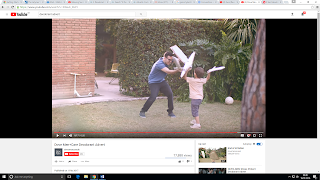


- Pack shot
Most deodorant ads have the final
shot of the product itself, which can showcase the entire range or interesting
packing. It usually places the product in the final third of the shot and
angles it slightly higher, to remind you of the angle you would see the deodorant
at if it was on a shelf or dressing table. This also means the audience leave
with a memory of the product and what it looks like, as it’s the last thing
they see. This is necessary as most deodorant ads depict a story so don’t
obviously display the product, just the effects of it. This is usually accompanied
by the product slogan in large text, as a device to summarise the whole deodorant.

- Usage shot
There is no fixed point for this shoot as it depends on the
story of the advert. It usually depicts the central character using the
product. The setting is typically a bathroom to give the sense of a long-lasting
effect – they are using it in the morning to aid them throughout the day.
It’s interesting to note that men are usually shirtless in
these shots, whereas women and depicted in vest tops. Both allowing their bare
armpits to be clearly visible. These are usually mid shots so that the full
torso is displayed. The characters also look down at their armpits as they
spray/ roll on.


- Reaction shot
This typically comes after the usage shot, or after the benefits
of the product have been described. It shows the character “go getting”, or
seizing the day and tasks ahead of them – displaying the usefulness of the deodorant.
This attempts to be as aspirational as possible to get a response from the audience. Often there is a clear definition between the before and after shot, via music, pace or lighting to convey the instant effects,


Before

After
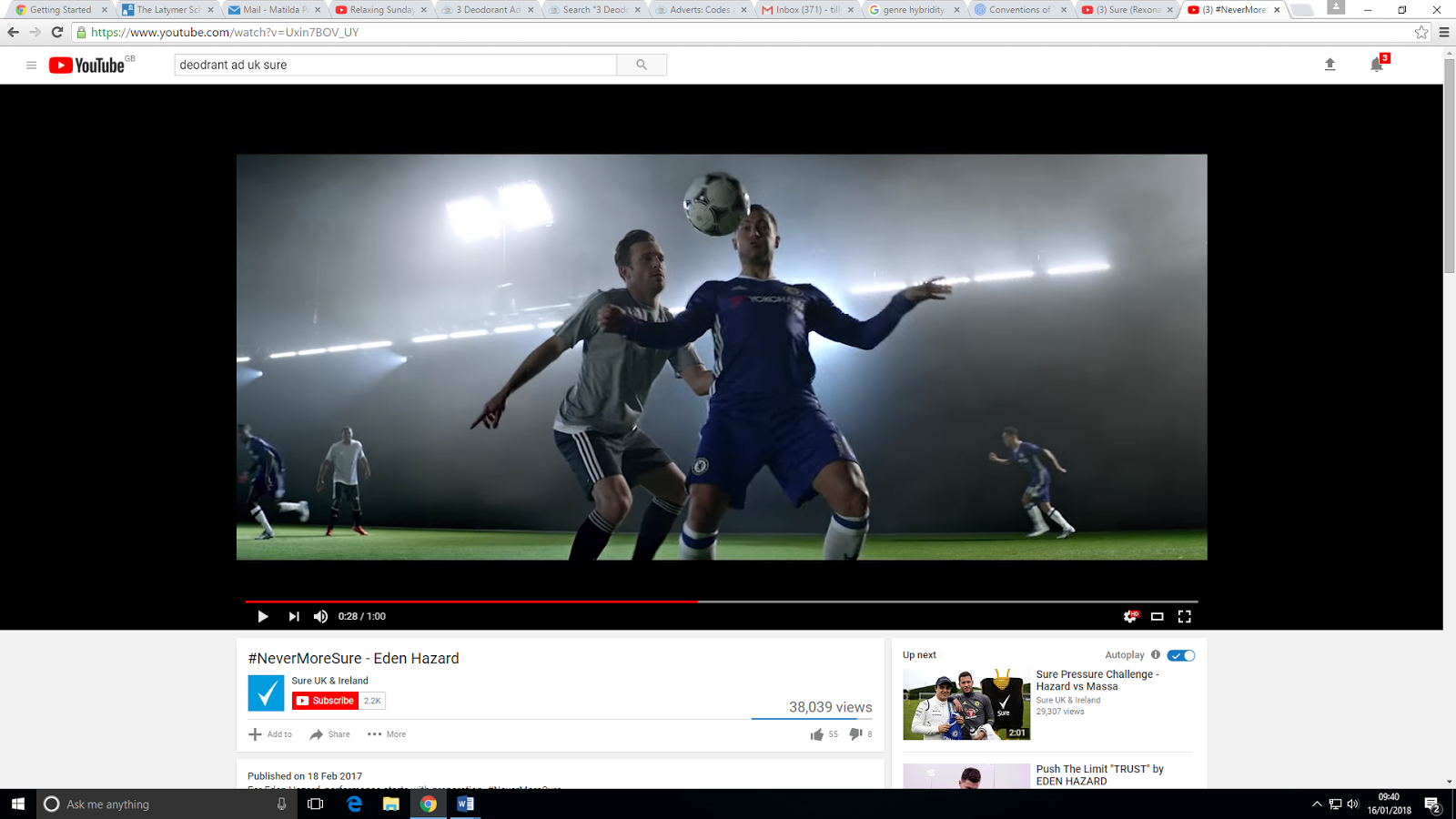
- Mise en scene – minimal and light
Light colours and bright lights are used to represent the
ideas of freshness and cleanliness we want to associate with personal hygiene
products. Mostly daytime settings are used also, unless the deodorant is trying
to portray the long lasting effect, at which point there is usually a shift
into night time to portray the passing of time related to the long lasting effects
of the product.


- Stereotyping characters

- Genre/Genre hybridity
There are many different genres that are used in advertising. For example surrealist, most notably the Cadbury's chocolate adverts, depicting everyday people doing odd things. This can also be used in deodorant ads, such as lynx, where women are depicted in large numbers acting unrealistically to a man using the deodorant. This kind of genre is usually used in male branded products to display the aspirations associated with there gender. Another thing I could use would be genre hybridity - blending themes and elements from two or more genres. This could also help me include some intertextuality, by including typical conventions of other media products to give the audience a clear recognition of the kind of advertising I am trying to convey. Most deodorant ads are done in a realist style, depicting the everyday setting with an attractive person, enhanced by the deodorant to give the audience a more realistic and seemingly achievable aspiration.


- Voiceover and music
Most deodorant ads don't feature speech from the characters but instead a voiceover. This is usually a male voice for men's ads and a woman for female ads. In my ad I hope to respond to the unisex style by narrating my tagline in two halfs, one said by a male and one by a female.
Instead of speech, these adverts use upbeat music. This illustrates the idea of fast paced lifestyles, happy or contented moods and also makes the adverts more memorable. For example the lynx advert uses the song "One is the loneliest number" to in reference to the story of there advert in which a lonely single guy falls in love and becomes "two" after using lynx.

- Graphics
Usually large font, clear to read. Often in white/blue in addition to usage of light colours to show freshness and cleanliness. These come hand in hand with the pack shot at the end of the advert and are not used during it.

Subscribe to:
Posts (Atom)