

Owns various smaller independent record labels (as pictured)
My artist is signed to universal music who have commissioned the music video to be made by a smaller independent production company.
"We identify and develop recording artists and songwriters, and we produce, distribute and promote the most critically acclaimed and commercially successful music to delight and entertain fans around the world." UMG
Universal do not have artists specific to one genre, examples of such are below:
- Lady Gaga
- Rihanna
- Lil Wayne
- Metallica
- ABBA
- Martin Garrix
Talks about how stars are manufactured by the industry and their record labels, to create a certain persona and serve a purpose. This is largely to make money specially in big corporations with large profit motives which is why the music industry is known for being fake and ruthless. In order to make money, record labels must produce consistently high quality music and artists that generate large fan bases.
How record labels make money
Labels essentially create legally binding contracts for artists that require them to produce a certain amount of music over a time period e.g. 3 albums over 5 years and the artist receives royalty payments after the music label receives all the money first. An advance payment however is often given to the artist at first to support them before any music has been releases. The label also markets, distributes and owns the music and brand of that artist, gives them a studio and puts them in touch with the right producers, stylists and musicians.
A label like universal is both horizontally and vertically integrated, having their own in house production teams and recording studios that allows them to take maximum profit. However, being a large corporation with lots of spending power allows them to commission others, in my case an independent music video production company, to better appeal to a niche market or to add some variety to their conventional formats, this works well in a dance music genre which is more niche than the common pop and mainstream music associated with the label.
Large labels like UMG have more power and high profile lawyers which mean often artists are left with unfair deals, like small royalty percentages, exclusivity and copyright binding contracts. Other revenue streams can also be created outside of just music sales. Income can be generated through performances at festivals, tours and selling merchandise.
Independent Music Video Production Companies
This is defined as a company 'free of government or corporate interest'
The mainstream media are often described as biased so small businesses can allow a wider range of creative control and this idea also fits with a culturally sophisticated demographic as they would want content which sends interesting or complex messages.
Case Study: Luti Media
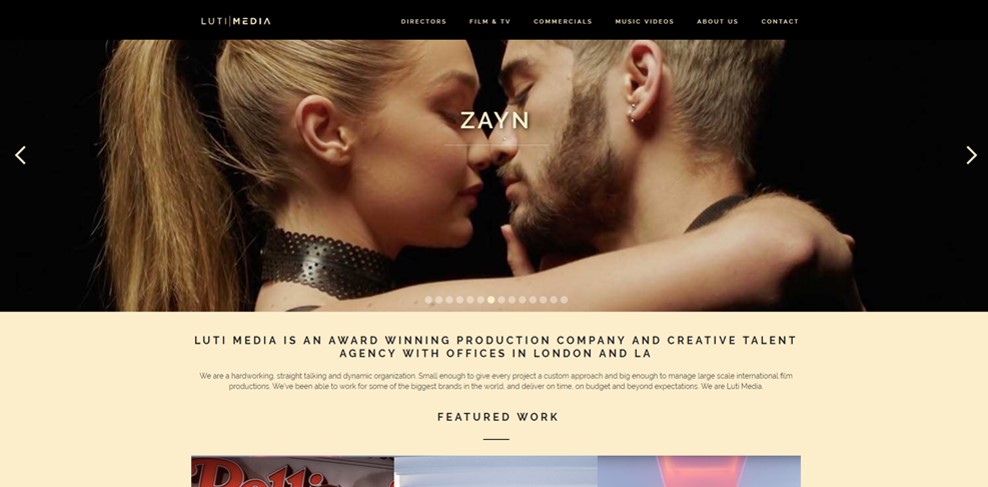
Founded in 2006, Luti media make music videos, films and television and work with in house and independent directors, mostly on commissioned projects. They talk on their website of including lots of product placement and brand tie ins with larger corporations and have won many awards for their output.
They have offices in both London and LA and have worked with the likes of Drake, Rita Ora, Jay Z and Iggy Azeala. This makes them a classic example of the kind of independent company Universal Music would commission to make a video for them. In fact, they are listed on their list of clients.
YouTube
YouTube is a video sharing website founded in 2005 and now owned by Google. Its used by both individuals and large corporations to grow audiences, The site is free and generates revenue from advertising, though it has recently started offering an ad-free paid subscription service. Artists can share videos via channels and playlists and get direct audience feedback via likes/dislikes/comments and subscribers. More than half of youtube views come from mobile devices and the site can be accessed online or via an app.
Universal have a fairly turbulent history with youtube, in 2007 they were accused of not following a copyright act by forcing videos using their music to be removed from the site. However, UMG also co developed Vevo, one of youtubes most popular music video channels.
YouTube is a video sharing website founded in 2005 and now owned by Google. Its used by both individuals and large corporations to grow audiences, The site is free and generates revenue from advertising, though it has recently started offering an ad-free paid subscription service. Artists can share videos via channels and playlists and get direct audience feedback via likes/dislikes/comments and subscribers. More than half of youtube views come from mobile devices and the site can be accessed online or via an app.
Universal have a fairly turbulent history with youtube, in 2007 they were accused of not following a copyright act by forcing videos using their music to be removed from the site. However, UMG also co developed Vevo, one of youtubes most popular music video channels.
There is supposedly a 'value gap' between what youtube makes and what artists who put content on the site make.“The biggest problem facing music creators is that the most significant source of online music, video streaming services, pay them insignificant royalties,” Gadi Oron, chief executive of Cisac, the international confederation of societies of authors and composers.
Spotify & Music Streaming sites
What I've learnt
- Decline in physical album sales with the rise of free music streaming services
- Number of music streams doubled from 2014-15
- YouTube pay some of the lowest royalties with $0.0003 paid per stream
- If we convert listeners to subscribers we'll make more money - but particularly in young generations they don't want to pay for music they've grown up having for free
- Unless you're generating huge followers (in the millions) you're likely not making any money, these sites aren't supporting up and coming artists
- Millennial's are spending 29% of their monetary contribution to the music industry on live music
- 'Real metric is fan engagement'
VEVO
Vevo is a youtube channel founded in 2009, as a joint project between Universal Music Group, Sony Music Entertainment and EMI.It is known as a 'content aggregator' as it markets and produces videos under the vevo trademark, taking a percentage of the revenue and in return giving artists videos exposure and a collective viewing channel. It gains 25billion youtube views per month and reach 60% of adults age 18-49, keeping my demograaphic at the lower end but making up a large percentage of those views. This is likely the channel where my artist would be posted and where people would be exposed to their content. Vevo refers viewers to online music stores to encourage purchase of music and advertisers are willing to pay large sums to have pop ups at the bottom of and at the beginning of videos.
The 4 hour vevo record is that for the most views recieved within 24 hours of its release. It is currently held by Taylor Swift (A universal music artist) for her music video for 'Look what you made me do' with 43 million views.
DANCE MUSIC INDUSTRY
Dance music is defined as:
It has therefore been around for centuries to accompany those dancing to a wide range of genres
The dance/club/EDM music scene was popularised in the nightclubs and tourist scene of Ibiza, Spain during the 1980's and is often termed the 'new wave'. Club and festival culture increased and the genre expanded further as disco music became accessible via computerization. EDM is generally created for playback by DJ's who create mixes. The scene has come under criticism for what's called 'push button DJ's' who don't live mix but simply use auto-synced tracks and pre-recorded mixes.
Saturday Night Live produced a sketch parodying modern EDM music
Controversy
Drug use
Ecstasy or MDMA has been largely popular in the dance music scene since its origins. The drug use is used to enhance further the experience of partygoers due to the release of chemicals in the brain, giving them a sense of euphoria. This works in conjunction with the loud music, lights and dancing.
One of the most common forms of death from ecstasy is death from dehydration which is why many people have lost their lives at dance music events due to the heavy sweating and dancing. 58 drug-related fatalities were recorded from 2010 to September 2016 in Ibiza. There have also been many recent notable drug deaths for example the DJ Avicii, Mac Miller and Demi Lovato (who overdosed and is now in recovery)

Music Video IndustryDance music is defined as:
dance music in British
The dance/club/EDM music scene was popularised in the nightclubs and tourist scene of Ibiza, Spain during the 1980's and is often termed the 'new wave'. Club and festival culture increased and the genre expanded further as disco music became accessible via computerization. EDM is generally created for playback by DJ's who create mixes. The scene has come under criticism for what's called 'push button DJ's' who don't live mix but simply use auto-synced tracks and pre-recorded mixes.
Saturday Night Live produced a sketch parodying modern EDM music
Controversy
Drug use
Ecstasy or MDMA has been largely popular in the dance music scene since its origins. The drug use is used to enhance further the experience of partygoers due to the release of chemicals in the brain, giving them a sense of euphoria. This works in conjunction with the loud music, lights and dancing.
One of the most common forms of death from ecstasy is death from dehydration which is why many people have lost their lives at dance music events due to the heavy sweating and dancing. 58 drug-related fatalities were recorded from 2010 to September 2016 in Ibiza. There have also been many recent notable drug deaths for example the DJ Avicii, Mac Miller and Demi Lovato (who overdosed and is now in recovery)

UK charity Help Musicians found that in 2016, 69 per cent of its 2,211 participants had experienced depression, while 71 per cent had panic attacks and/or high levels of anxiety. People working in music may be three times more likely to experience depression than the general public.
This article from The Independent "'It's unacceptable to expect DJs to keep going and going': Why Avicii's death is a wake-up call for the music industry" talks widely about the ups and downs of a music career in conjunction with endless touring takes a huge toll on an artists mental and physical health, often leading to drug addiction. Artists are being more vocal about this struggle now with the nightclub Fabric even offering guided meditation and donating profits to the mental health charity "Calm".
Algorithms, Product Placement and Shirtless Boys: Inside the Music Video Economy of 2018
- Music Videos have a huge impact on popular culture, think Michael Jackson 'Thriller' the biggest video ever played on MTV
- Online platforms like YouTube now have huge effects on how songs/artists fair
- Danny Lockwood of Capitol Music Group said “When I started,” he says, “videos were purely loss leaders, and MTV airplay was the golden ring: We aimed for brainwash rotation and labels were selling CDs.”
- The internet created a larger business model with larger budgets and greater artist exposure
- "MTV’s playlists were small, and you were watching whatever MTV decided to serve you. Now, the eyeballs have become more valuable because they’re not passive.”
- Horizontal videos are those created to fit on a computer screen but it is now more important to have Vertical videos where content is accessible via smart phones, this is also relevant for websites.
How music videos are made
The label gives out a budget and rough idea of the song and appoints an executive known as the 'video commissioner'. They then pair up artists and independent music video directors
“Directors’ reps would come to all the labels and plug all their clients,” Lockwood says. “Now it’s the wild west. There’s a few reps left, but they handle a hundred directors apiece. The commissioners now have to hone their relationships and creative acumen.”
Music video directors have had their careers made by just one video. Michel Gondry is a French film director who has often been commissioned to create music videos aswell, which began his career. The artist Björk first noticed him and the pair have since collaborated on eight videos. He's also directed for bands like Daft Punk, The White Stripes and Paul McCartney. Through an extensive career he has produced a recognisable style.
- Sarah McColgan
- McColgan is a female director, unusual in a male dominated career but who has made a huge name in the industry as a independent director for artists like David Guetta, Afrojack and Charlie XCX. In an interview with CRACK she said:
"I think the role of the music video is evolving and changing. People have the power to choose exactly what they want to watch and it’s right in the palm of their hands. Creators have so much freedom and the tools are so much more accessible now. You can make a video on your iPhone that is seen by a billion people. At the core, a music video is a marketing tool for the artist. But as a creative medium for the director, the possibilities are wide open, there is a freedom in making music videos, you can push the limits as far as your mind will take you. It’s an exciting space to work in, and I’m looking forward to seeing how it continues to evolve."
Marketing Artists within the industry
Music artists are marketed differently in the Web 2.0 age than ever before. Cross brand and cross technological marketing now sees artists as 'brand-me'. Artists now have clothing lines, modelling jobs, huge social media following. Fans want 360 degree coverage of the favourite artists they want to see personality, style and product endorsement as well as just the music. For example, Rihanna now has her Fenty clothing line, a brand collaboration with Puma. It works because she retains a large amount of creative control so you see her values, attitudes and beliefs through her work. Her Fenty lines promote ethnic and body diversity with shows featuring a huge range of models, promoting LGBT rights and high quality products. She promotes these lines through social media and is vocal in interviews about what is important, all this has seen her brand last over 15 years and make her one of the richest female artists of all time.

Digital Revolution and the future of the music industry
- The survival of the fittest effect produced by Capitalism and how small brands are tackling this
- 3 major record labels own over half of the worlds records


